Buildings are not controlled environments. They are communities. The best technology adapts to them instead of forcing them to adapt to it.
Asa part of our series about cutting-edge technological breakthroughs, I had the pleasure of interviewing Colin Foster.
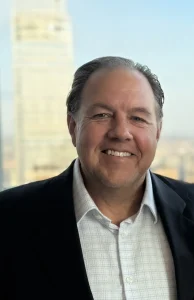
Colin Foster is the Founder and Chief Innovation Officer of Virtual Service and the creator of VIRTUAL DOORMAN®, the pioneering remote building-wide entry and access management platform for residential buildings. Long before “PropTech” became an industry category, Foster recognized that technology, live human judgment, and building operations could be integrated to deliver a new model of access, security, and resident service. Since founding the company, Foster has led the development of a platform that combines installed access infrastructure, video intercom technology, centralized software, and trained live operators to help buildings manage visitors, deliveries, vendors, residents, and real-time access events. Foster is widely regarded as the creator and trusted authority in the category. His work has helped redefine how residential buildings think about staffing, access control, resident convenience, and operational efficiency — moving the industry beyond simple intercoms and into a more intelligent, service-driven model of building management.
Thank you so much for joining us in this interview series! Before we dive in, our readers would love to learn a bit about you. Can you tell us a story about what brought you to this specific career path?
The idea for VIRTUAL DOORMAN came from a very real, very everyday frustration.
I was living in New York City and saw a clear divide between buildings that had full-time doormen and those that did not. In many ways, that one feature changed the entire experience of living in a building. A doorman provided convenience, security, accountability, and a sense that someone was paying attention. But for many buildings, especially smaller and mid-sized properties, the economics simply did not work. Staffing a front desk around the clock was expensive, and many buildings could not justify or sustain it.
At the same time, I could see that technology was advancing quickly. Cameras, access control systems, telecommunications, and remote connectivity were all improving. But no one had really connected those pieces into a managed service that could replicate many of the practical functions of a traditional doorman.
That was the opening. The question became: Could we take the most valuable parts of the doorman experience — human judgment, controlled access, visitor assistance, package support, and building oversight — and deliver them remotely through technology?
That question became the foundation for VIRTUAL DOORMAN. It was never just about creating a video intercom. It was about building an operational model that combined technology with trained people and real building protocols.
Can you share the most interesting story that happened to you since you began your career?
One of the most interesting parts of this journey has been watching an idea that initially sounded unusual become an accepted part of the residential real estate landscape.
In the early days, when we described the concept of a “virtual doorman,” people would often pause. Some immediately understood it. Others needed to see it in action. There was skepticism because the traditional doorman model was so deeply ingrained in cities like New York. People understood a person standing at a desk. They did not yet understand that a trained operator, connected through the right technology, could manage access and provide service from a centralized location.
The most interesting stories have come from buildings where the system proved itself in real life — not in a sales presentation, but during actual day-to-day operations. A delivery arrives when no one is home. A resident is locked out. A visitor is confused. A vendor shows up unexpectedly. A suspicious situation develops at an entrance. Those are the moments when people understand the difference between a device and a managed service.
Over time, the industry started to catch up to the idea. Today, “remote access,” “virtual concierge,” and “PropTech” are common terms. But when we started, we were creating the playbook while also proving that the model could work.
That has been one of the most rewarding parts of the career: seeing something that began as a practical solution become a category.
Can you tell us about the cutting-edge technological breakthroughs that you are working on? How do you think that will help people?
The most important breakthrough we are working on is not one single device. It is the integration of multiple layers of technology and service into one managed building operations platform.
VIRTUAL DOORMAN combines three critical elements:
- Installed access infrastructure — video intercoms, access control hardware, cameras, smart locks, and building entry devices.
- A centralized control platform — software that allows buildings, managers, residents, and operators to coordinate access events and maintain visibility.
- Live operator protocols — trained personnel who can interact with visitors, verify information, follow building-specific procedures, and make real-time decisions.
The breakthrough is in the way those layers work together. A camera by itself does not solve a problem. An intercom by itself does not manage a building. An app by itself cannot apply judgment. But when you combine connected hardware, software, and trained human intervention, you create a much more intelligent operating system for residential buildings.
This helps people in very practical ways. Residents get more convenience. Property managers get more visibility and documentation. Building owners can reduce reliance on expensive staffing models. Vendors and delivery personnel can be managed more efficiently. And buildings that could never afford a traditional 24/7 doorman can still offer a higher level of access management, resident service, and security.
How do you think this might change the world?
I think it changes the world by changing expectations around access, safety, and service in the places people live.
For decades, certain building services were available mainly to luxury properties with the budget for full-time staff. If you lived in a smaller building, a walk-up, a mid-market rental, or a condominium without a doorman, you often had a very different experience. You might miss deliveries. You might have less control over vendor access. You might rely on outdated intercoms or keys. The building might have limited visibility into who came and went.
Remote building operations can make a higher standard of service available to a much broader range of properties.
That is a meaningful shift. It means technology can extend a higher standard of building service to properties that were historically limited by the economics of full-time staffing. It also means buildings can operate more intelligently, with better records, better procedures, and better resident communication.
The larger change is that buildings are becoming more like managed networks. Access, service, communication, and security are no longer separate silos. They are converging into one operational layer. I believe that is where the future of multifamily housing is going.
Keeping “Black Mirror” in mind, can you see any potential drawbacks of this technology that people should think more deeply about?
There are potential downsides, ethical concerns, and unintended consequences of technology if it is used poorly or taken too far. For VIRTUAL DOORMAN, that means addressing things like privacy concerns, over-surveillance and over-automation, data access and retention, while maintaining resident trust and continuing to recognize the importance of keeping human judgment in the process.
We must acknowledge that technology in residential buildings must be handled carefully because people are not just entering a commercial facility — they are going home. Any technology that touches access, cameras, identity, or residential life has to be handled carefully.
The biggest risk is assuming that more technology automatically means better outcomes. It does not. Technology needs governance, clear policies, human oversight, and respect for privacy.
There are also risks around over-automation. If every decision is pushed to an algorithm or an app, you can lose context. Buildings are full of real-world exceptions. A resident may be elderly. A visitor may be confused. A delivery may not match the expected pattern. A situation may require judgment, empathy, or escalation.
That is why our model has always kept trained human operators at the center. We believe the future is not simply replacing people with technology. It is using technology to give trained people better tools, better visibility, and better procedures.
The other issue is transparency. Residents and property managers should understand what is being monitored, what is not being monitored, who has access to information, and how data is handled. Trust is essential. Without trust, even useful technology can feel intrusive.
Was there a “tipping point” that led you to this breakthrough? Can you tell us that story?
The tipping point came from seeing how dependent residential buildings were on a single staffing model — and how vulnerable that model could become.
In New York, the possibility of doorman strikes was always a very real concern for building owners, managers, and residents. Even the threat of a strike created anxiety. Buildings had to think about what would happen if the people responsible for access, deliveries, visitor management, and day-to-day resident support were suddenly unavailable. For residents, that uncertainty was frustrating. For property managers and boards, it exposed a much larger operational issue.
That experience made something very clear to me: the traditional doorman model was not just a staffing model. It was an operating system for a building.
A doorman was not only opening the door. He or she was observing patterns, recognizing residents, handling exceptions, managing deliveries, communicating with visitors, and creating accountability. Once I understood that, the challenge became much more interesting.
The question was no longer, “Can technology open a door remotely?” That is relatively simple.
The real question was: Can we design a remote operating model that captures the intelligence, consistency, and accountability of that role — while giving buildings a more resilient way to operate?
That was the breakthrough. We had to think beyond hardware. We had to build procedures, operator training, building-specific instructions, escalation protocols, software workflows, and documentation. The system had to work not just once, but thousands of times across different buildings with different residents, different layouts, and different rules.
In many ways, the concern around doorman strikes helped reveal the larger opportunity. Buildings did not simply need another device. They needed a more flexible and reliable operational layer — one that could support access, service, and oversight even when the traditional staffing model was under pressure.
That shift — from product thinking to operational platform thinking — was the tipping point.
What do you need to lead this technology to widespread adoption?
Widespread adoption requires three things: education, trust, and integration.
First, the market needs to understand that remote building operations are not the same thing as a video intercom. Many products can connect a visitor to a resident. That is not the same as having a managed service with trained operators, building-specific protocols, and real-time access support.
Second, property owners and boards need trust. They need to know the service is reliable, professional, and supported by real operational experience. Buildings are risk-sensitive environments. You cannot simply install technology and hope residents adapt. You need a thoughtful deployment process, clear communication, and ongoing support.
Third, the technology needs to integrate with the rest of the building ecosystem — access control, cameras, locks, resident apps, property management workflows, and package systems. The future is not a collection of disconnected devices. It is a unified operational layer.
Adoption will accelerate as owners and managers realize that this is not just a convenience amenity. It is a more efficient way to operate buildings.
What have you been doing to publicize this idea? Have you been using any innovative marketing strategies?
For many years, our best marketing was the buildings themselves. When residents and managers experienced the system working in real life, that became the proof.
More recently, we have been much more intentional about telling the broader story. VIRTUAL DOORMAN is not a new startup chasing a trend. We were first to market and created this category. That gives us a very different perspective from companies that are entering the market now with single-point products.
Our marketing strategy is focused on education. We want property managers, boards, developers, and owners to understand the difference between a device, an app, and a managed operational service. We are also emphasizing proof: real building scenarios, resident experience, cost comparisons, service reliability, and the evolution of the category over time.
We are leaning into thought leadership as well. The real estate industry is under pressure from rising labor costs, resident expectations, insurance concerns, package volume, and the need for better building visibility. Our message is that the answer is not simply “more tech.” It is better-integrated operations.
None of us are able to achieve success without some help along the way. Is there a particular person who you are grateful towards who helped get you to where you are? Can you share a story about that?
Get Authority Magazine Editorial Staff’s stories in your inbox
Join Medium for free to get updates from this writer.Subscribe
Remember me for faster sign in
One person I will always be grateful to is the late Nick Laporte, former President of Associated Owners and Builders of New York.
We met Nick by chance at a very early and vulnerable stage of the business. We had just launched VIRTUAL DOORMAN and had finally reached the point where we could afford a real office space in downtown Manhattan. As luck would have it, our office was next door to Nick’s.
That proximity turned into one of the most important relationships in the company’s early history.
Nick was generous with his time, his advice, and his relationships. He understood the New York real estate industry deeply, and more importantly, he understood people. At a time when VIRTUAL DOORMAN was still a new and unfamiliar idea, he did not dismiss it. He listened, asked questions, challenged us, and then did something that made an enormous difference: he opened doors for us.
He gave advice. He made introductions. He helped us understand how building owners and managers would think about the service. He even allowed us to set up our very first working demonstration of Virtual Doorman in his own office so that owners and managers could come in, see the concept in action, and understand that this was not just an idea — it was a real, practical solution.
That may sound simple now, but at the time it meant everything. We were asking people to believe in a completely new way of delivering building service and access control. Nick put his own reputation behind us before the market had fully understood what we were building.
For an early-stage company, that kind of belief is invaluable. It gave us credibility at a moment when credibility was exactly what we needed most.
I remain deeply grateful to Nick not only for the connections he made, but for the confidence he gave us. He was a mentor, a friend, and one of the people who helped turn VIRTUAL DOORMAN from a concept into a company.
How have you used your success to bring goodness to the world?
We are a technology company based on human trust and communication. We have people 365–24–7 staffing our buildings — no they are not in the lobby -but they are there. When we are asked by a resident, who has called us on their cell phone, if they can talk to us as they do a late night walk through the parking lot to their entrance — we are making them feel safer, and showing compassion. When a resident has lost their key and can’t get in, we help them get home. We have helped residents find missing packages that have great importance to them. We think we help people feel more secure in their daily lives and feel that they are part of a community that cares!
One of the things I know is that we helped make a higher standard of residential service available to more people, not just luxury buildings. For a long time, services like professional visitor management, delivery oversight, and around-the-clock building support were largely limited to properties that could afford full-time doormen. Smaller buildings and mid-market properties often had to operate with far fewer resources, even though residents still wanted the same sense of security, convenience, and accountability. By creating a remote operational model, we helped close some of that gap. Buildings that could never justify a traditional staffing model are now able to provide residents with a more organized, responsive, and secure living experience.
What are your “5 Things I Wish Someone Told Me Before I Started” and why?
Looking back, the biggest lesson is that building a category requires more than an idea. It requires patience, discipline, and the willingness to learn from real-world conditions every day. VIRTUAL DOORMAN was never just about making access remote. It was about building a new standard for how residential buildings could deliver service, security, and accountability at scale.
1. When you create a category, you are not only selling a service, you are teaching the market how to think differently
When we first started talking to building owners and managers about VIRTUAL DOORMAN, the hardest part was not convincing them that they needed better access control. They already understood the problem. The harder part was explaining that there could be a completely new model for solving it.
At the time, people understood two options: either you had a traditional doorman sitting in the lobby, or you had a basic intercom system that buzzed people in. What we were proposing did not fit neatly into either category. We were saying, “Imagine trained operators, live video, controlled access, documented interactions, and resident support — all delivered remotely.” Today that language sounds familiar. Back then, it required a lot of explanation.
In early meetings, we would often have to walk people through the same scenario several times: a visitor arrives, presses the intercom, reaches a live operator, the operator verifies the purpose of the visit, contacts the resident if needed, follows the building’s protocol, and only then grants access. Once people saw the sequence, they understood it. But before they saw it, they did not have a mental category for it.
That taught us something important: when you create a category, you are not only selling a service. You are teaching the market how to think differently. It can be slow and repetitive, but it is also powerful. If you are the company doing the educating, you have the opportunity to define the standards, the language, and the expectations for everyone who comes after you.
2. Technology without an operating model is fragile
In the beginning, it would have been easy to believe the technology was the business. We had cameras, intercoms, door releases, access control equipment, and software. Those pieces mattered, of course. But we learned very quickly that the real value was not the equipment itself. The real value was what happened when a human being had to make a judgment call.
For example, a delivery person arrives after hours with packages for multiple residents, but the resident list is incomplete. Or a vendor says they are expected, but the building manager has not notified us. Or a visitor gives the right apartment number but the resident does not answer. A basic device cannot decide what to do in those situations. It can only connect a call or unlock a door. The service depends on the protocol behind the moment.
That is why we spent so much time building procedures. What does the operator ask? When do they escalate? When do they deny access? When do they document the interaction? When do they contact management? These details became the difference between a video intercom and a true managed service.
The lesson is that technology without an operating model is fragile. The hardware may open the door, but the protocol determines whether the right person gets through it.
3. Buildings are not controlled environments; they are communities
One of the biggest lessons came from seeing how different every building really is. On paper, two buildings can look similar: same number of units, same city, same basic access needs. But once you begin operating inside them, they can feel completely different.
One building may have residents who travel frequently and rely heavily on package and vendor access. Another may have a board that wants very strict controls around guest entry. Another may have a property manager who wants every unusual incident documented immediately. Another may have an older resident population that needs more patient, hands-on support when using the system.
We learned that you cannot treat buildings like identical installations. The physical layout matters. The resident culture matters. The management style matters. Even the rhythm of the building matters — when deliveries arrive, when staff is present, how residents communicate, and what kinds of exceptions come up most often.
That shaped how we built the business. We needed a standardized framework so service would be consistent and reliable, but we also needed enough flexibility to respect each building’s reality. A system that works beautifully in theory can fail if it does not fit the way people actually live.
The lesson is that buildings are not controlled environments. They are communities. The best technology adapts to them instead of forcing them to adapt to it.
4. In residential access and building operations, trust is the product
In this business, people do not think about the system when everything is working. They think about it when something goes wrong, when someone is standing at the entrance, when a resident cannot be reached, when a delivery needs to be handled, or when management needs to know exactly what happened.
That is when trust matters most. We learned this in countless small moments. A resident is locked out late at night. A property manager needs confirmation of who entered the building. A delivery driver is pressuring to be let in quickly. A visitor claims they were expected, but no authorization is on file. In those moments, the value of VIRTUAL DOORMAN is not that there is a camera or a screen. The value is that a trained operator is there, following a defined process, documenting the interaction, and making a careful decision.
Trust is built through consistency. Residents need to know the system will work when they need it. Property managers need to know operators will follow the building’s rules. Owners need to know there is accountability. That has influenced every part of the company — training, communication, escalation procedures, documentation, and support.
The lesson is that in residential access and building operations, trust is not a byproduct. Trust is the product.
5. Experience cannot be copied easily
Over time, we started seeing other companies use language that sounded similar to ours. That is what happens when a category grows. The words spread. The market adopts the terminology. Competitors begin describing themselves in ways that sound familiar.
But there is a major difference between using the language and having the experience behind it. Decades of operating in real buildings teach you things that cannot be learned from a pitch deck. You learn that the exception is often more important than the standard scenario. You learn how residents behave when they are frustrated. You learn what property managers need when there is a dispute. You learn how vendors try to gain access, how deliveries actually happen, and how small operational details can become major service issues if they are not handled properly.
Those lessons compound. Every building, every unusual access request, every after-hours incident, every resident concern, and every management escalation adds to the operating knowledge of the company. That experience becomes part of the service itself.
The lesson is that language can be copied. Experience cannot be copied easily. If you keep learning from the field, your advantage becomes deeper over time.
You are a person of great influence. If you could inspire a movement that would bring the most amount of good to the most amount of people, what would that be? You never know what your idea can trigger. 🙂
I would inspire a movement around human-centered technology in the built environment.
There is a lot of excitement around automation, artificial intelligence, and smart buildings. That is understandable. But the goal should not be to remove humanity from the places where people live and work. The goal should be to use technology to make those places safer, more responsive, more efficient, and more humane.
In residential buildings especially, technology should support people. It should help residents feel more connected, help managers make better decisions, and help staff work more effectively.
The movement I would support is one where innovation is measured not just by how advanced the technology is, but by how well it improves everyday life.
Can you please give us your favorite “Life Lesson Quote”? Can you share how that was relevant to you in your life?
One of my favorite life lesson quotes is one that my father said often: “The harder I work, the luckier I get.”
That has been very true in my life and in the story of VIRTUAL DOORMAN. When you are building something new, especially something the market does not yet fully understand, there are many moments when progress feels slow. You can be making calls, taking meetings, explaining the same idea over and over, and wondering when the breakthrough will come.
But over time, I learned that the work creates the conditions for luck. The more conversations you have, the more prepared you are, and the more consistently you show up, the more likely it is that the right person, the right introduction, or the right opportunity will appear.
One of those opportunities came through Nick Laporte, who I mentioned earlier. He was the President of Associated Owners and Builders of New York and we met him by chance when our first real office was next door to his. He became a mentor and friend, helped us make important connections, and even allowed us to demonstrate VIRTUAL DOORMAN in his office for building owners and managers.
That could be described as luck, but it only became meaningful because we had done the work. We had a real concept, we were prepared to explain it, and we were willing to keep pushing even when the category did not yet exist. That quote reminds me that luck is not passive. Very often, it is the result of persistence.
Some very well-known VCs read this column. If you had 60 seconds to make a pitch to a VC, what would you say? He or she might just see this if we tag them 🙂
VIRTUAL DOORMAN created the category before PropTech had a name. Decades ago, we identified a problem that has now become unavoidable: multifamily buildings need better security, resident service, and operational visibility, while traditional staffing models are increasingly expensive and difficult to scale.
Most companies in this space sell point solutions — an intercom, an app, a smart lock, or access-control software. VIRTUAL DOORMAN delivers the full operating model: installed building infrastructure, centralized software, mobile access, and trained live operators working together as one managed platform.
That means we are not just opening doors remotely. We are managing the real-world access events that define residential building operations: visitors, deliveries, vendors, lockouts, resident requests, suspicious activity, and after-hours issues — with human judgment, documentation, and accountability built in.
Our advantage is experience. We are not learning this market from a pitch deck. We have decades of operating history across real residential buildings, and that knowledge is embedded in our protocols, technology, and service model.
The opportunity is significant because every multifamily building has access events, deliveries, vendors, residents, visitors, and security concerns. The question is no longer whether buildings will modernize. The question is which model they will trust. VIRTUAL DOORMAN created the category, and now we are positioned to define its next stage — not as another hardware vendor, but as the operating system for modern residential building service.
How can our readers follow you on social media?
Readers can learn more about VIRTUAL DOORMAN and follow our updates through:
Website: VirtualDoorman.com
LinkedIn: Virtual Doorman
Instagram: @VirtualDoorman
Facebook: Virtual Doorman
Thank you so much for joining us. This was very inspirational.